

The automotive industry is one of the largest and most stable sectors in the U.S. economy, and becoming an automotive mechanic offers a rewarding, hands-on career path with plenty of opportunities for advancement.
Whether you're interested in working at local repair shops, car dealerships, or even starting your own garage, this guide will walk you through everything you need to know.
What do mechanics do?
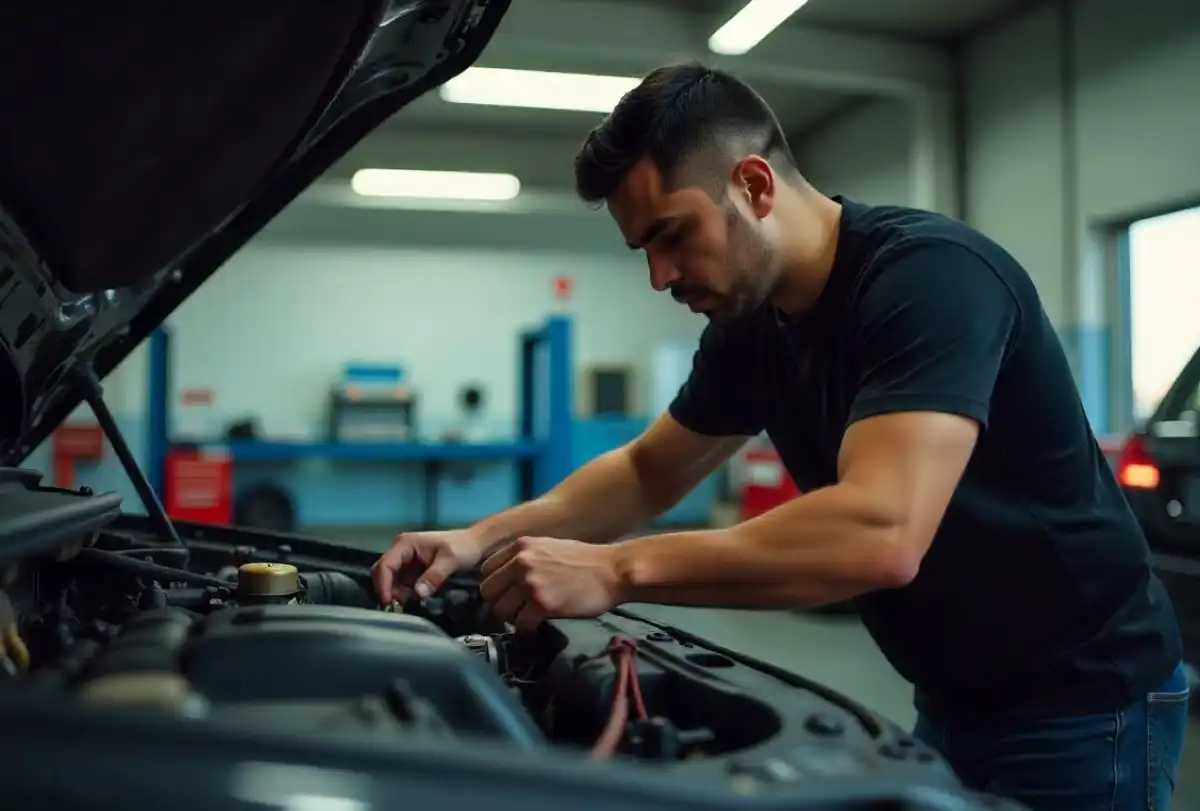
Automotive technicians are responsible for diagnosing, maintaining, and repairing vehicles of all types—from compact cars to light trucks and SUVs. Their work involves inspecting brake systems, replacing worn parts, and performing routine services like oil changes. Many mechanics work in repair shops or at car dealerships, but others prefer to start their own repair shop.
Mechanics work with a variety of tools and diagnostic equipment. They often use computerized systems to identify issues and ensure the car is functioning properly. In today’s rapidly evolving automotive industry, mechanics are expected to stay current with new technologies, especially in hybrid and electric vehicles.
Below, you will find practical steps you can take today to start your path to becoming an auto mechanic.
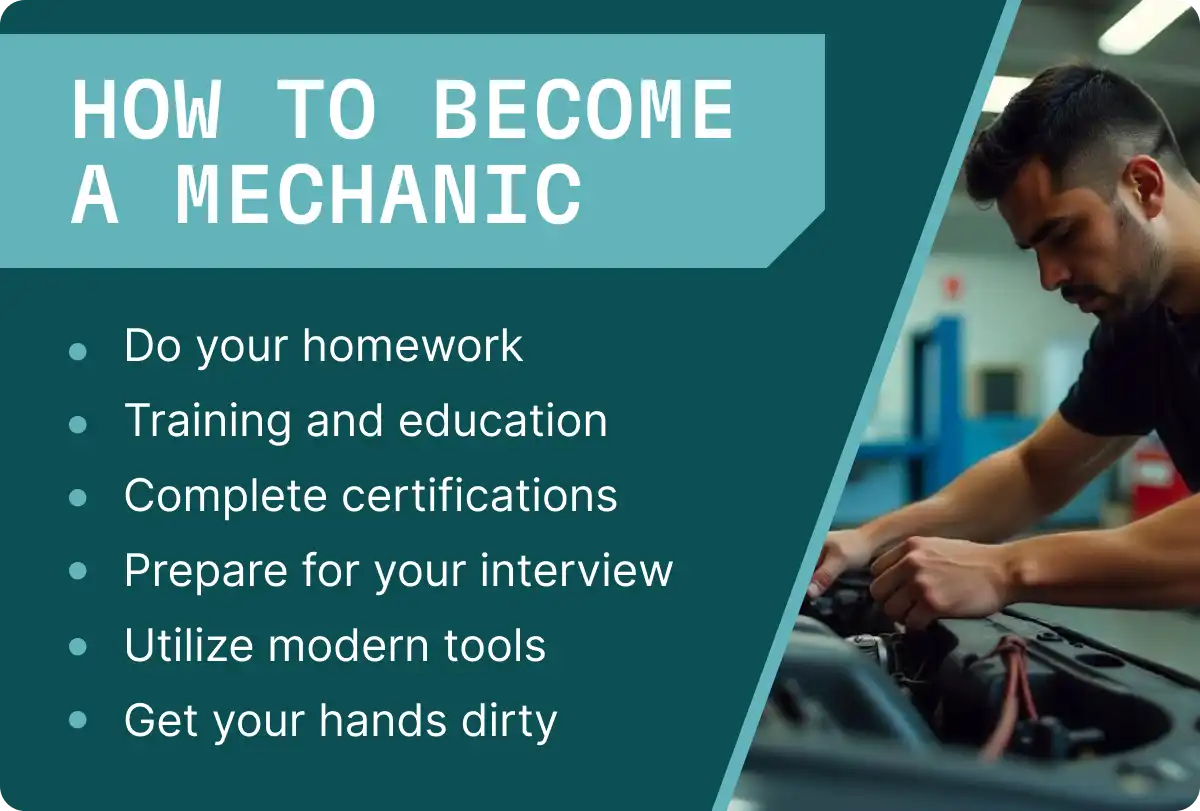
6 Steps to becoming a car mechanic
Starting a new career path can be challenging, so we outlined 6 practical steps you can take to jump-start your career.
1. Do your homework
Before you start your career, it is wise to consider if this is the right job for you. Will it pay enough to support your needs? Will you be able to keep up with the physical demands of the job? These are just two of the questions you need to ask yourself before moving forward.
How Much Do Automotive Mechanics Make?
According to the U.S. Bureau of Labor Statistics, the average salary for automotive service technicians and mechanics in 2024 was approximately $49,670 per year, or about $23.88 per hour. However, salaries can vary based on several factors such as:
- Location: Mechanics in cities or states with a higher cost of living tend to earn more.
- Certifications: Holding ASE certifications or specializations can boost income.
- Experience: Entry-level technicians typically earn less than seasoned professionals.
- Industry: Working at car dealerships or as a mobile mechanic can pay differently than working in a small auto repair shop.
2. Training and education
Pursuing the right education, certifications, and training programs will set you on the right path to a successful career. Each path has unique benefits but it is best to select the path that will help you achieve your career goals.
Do I need to go to school to become a mechanic?
While formal training is not always required, it is highly recommended. Employers in both independent repair shops and dealerships prefer candidates with a solid educational background and certifications. If you opt not to pursue formal education, you will need to find a personal connection or an apprenticeship program where you can learn while working.
How long will it take to become a mechanic?
The timeline to becoming an auto mechanic depends on the education path you choose. In total, it may take anywhere from 6 months to 4 years to become job-ready, depending on the path and certifications you pursue. Here are the most common routes:
- High School Diploma or GED: Most mechanic jobs require at least a high school diploma or equivalent.
- Vocational Schools or Trade Schools: These typically offer certificate programs lasting 6 months to 1 year, giving students a fast track into entry-level roles.
- Community College or Associate Degree: Completing an associate degree in an automotive technology program usually takes about 2 years and provides a deeper understanding of vehicle systems.
- Apprenticeships: These allow students to earn while they learn and may last 2 to 4 years.
- On-the-Job Training: Some auto mechanics begin their careers with no formal education and learn through hands-on experience at a repair shop or dealership.
3. Complete certifications
The most respected credential in the field is the ASE certification, offered by the National Institute for Automotive Service Excellence. Mechanics can earn ASE certification in areas such as engine repair, brake systems, electrical systems, automatic transmission, and heating/air conditioning.
To become ASE certified, you’ll need at least two years of work experience or a combination of formal training and on-the-job training. You’ll also need to pass one or more certification exams. Mechanics who pass tests in all major areas and have the required work experience can earn the title of Master Technician.
Being ASE certified shows employers and customers that you're a professional who meets industry standards. Many employers pay higher wages to certified auto mechanics, and some dealerships require ASE credentials for certain positions.
4. Prepare for your interview
Finding the right shop to start your career at can be a daunting task. It is often easiest to start at an express shop so you can get your feet wet before pursuing your career goals. Once you have applied to a shop, it is time to start preparing for the interview.
Mechanic Job Interview Questions
Whether you're aiming for a position at a dealership or local garage, be prepared for a formal interview. Here are common questions you may encounter:
- Tell me about yourself and your experience as an automotive technician.
- Why do you want to work for our company/shop?
- How do you stay up to date with new automotive technologies and repair techniques?
- What certifications do you currently hold (ASE, manufacturer-specific, etc.)?
- Are you comfortable working weekends, evenings, or overtime if needed?
When answering, emphasize your hands-on training, work experience, and your commitment to continuous improvement. Don’t forget to highlight soft skills like teamwork, communication, and adaptability.
5. Utilize modern tools
The modern repair shop has embraced new technology to help improve efficiencies and revenue. Strive to have a solid understanding of modern diagnostic tools, apps, and software so you can hit the ground running. Another way to stand out to your future employer is to already have experience with their shop management system, so they don’t have to train you as much.
6. Get your hands dirty
Let the fun begin! Once you have landed your first job, learn to fail fast and ask questions as you meet more experienced technicians. Ask yourself each week if you are enjoying your job and if you think this is still the right career path for you. Don’t forget to make connections in the industry to boost your network and career path.
Final Thoughts
A career as an auto technician is more than just a job—it’s a skilled trade that keeps America moving. Whether you're working on a simple oil change or a complex engine repair, you'll be solving real-world problems and helping people stay safe on the road. With growing demand for mechanics who can service modern vehicles equipped with sophisticated electronic systems, the field is only becoming more essential.


.svg)



.svg)

.svg)
.svg)
.svg)
.svg)
.svg)
.svg)