Cars are expensive, complicated machinery that most of us happen to rely on every day. And while we've probably spent a larger portion of our lives driving than we want to realize, the inner workings of their vehicle remain unintuitive to most of us.
That's exactly why your shop exists! To help your customers take care of the costly, sometimes difficult repairs so they can get back to their lives, whether that’s bringing the kids to soccer practice or getting to work on time!
Independent auto repair shops can overcome that skepticism from customers. After all, anything is possible with the right tools for the job. When that comes to customer service, independent auto repair shops can start using those tools with a modern shop-management system.
One that makes the often painful, expensive process, of getting their car fixed as simple, easy, and painless as possible.
More specifically, with Tekmetric, shops can show customers what's wrong with Digital Vehicle Inspections, and even help them cover the unexpected cost of a necessary repair with checkout options like Buy Now, Pay Later.
Customers can see photos and videos of exactly what’s wrong with their vehicles, see the urgency of each proposed repair, and approve or decline jobs directly from their smartphones.
DVIs simplify the entire process from both ends, enabling your team to offer amazing customer service most of us don't expect from an independent auto repair shop.
Technicians can build inspections on their smartphones or tablets, and take pictures or record videos to clearly illustrate what parts need to be repaired or replaced. This lets the customer see and hear the problem with their own eyes and ears.
Why DVIs are the Right Tool for the Job
Telling a customer their wheel bearing is going bad on a paper printout will have a different effect than showing them a video of your technician rotating that wheel bearing, recreating that awful howling noise the customer hears every time they drive.
Customers expect digital experiences. We have our receipts emailed to us instead of printed, we can order groceries online, and we get pictures when our deliveries are dropped off. Almost everything we purchase has a digital component, and your shop should be no different.
Auto repair shops can easily provide a modern customer experience with digital vehicle inspections by emailing or texting the results directly to the customer, including those pictures or videos technicians include in their inspection findings.
And you can stop wasting time on phone calls and tracking down your guests for the green light on repairs. Tekmetric lets customers review repair orders directly in those digital inspection findings your shop sent them.
Within a matter of seconds, at their convenience, customers can approve the work so your shop can get started, and get their vehicle back on the road as quickly as possible.
Buy Now, Pay Later Options Bring Your Shop into 2023
Here’s where the tricky part comes in: the customer hesitates to approve the repair order.
The sticker shock of a big repair they weren’t expecting can generally lead to customers picking and choosing what they want to repair so it fits their budget. In some cases, this means sometimes putting off important repairs that could end up dangerous if ignored.
That's exactly where buy now, pay later comes in.
Why Buy Now, Pay Later Options are the Right Tool for the Job
With our industry-first offering of buy now, pay later via Affirm or Klarna, we make it easy for shops to get those expensive repairs approved by providing customers with the option to pay for the repair over time, while you get paid the same day.
And you’ll still see a host of new benefits, like:
Get paid on time by allowing your customers to pay over time
Make more money by increasing your Average Repair Order value
Keep everything simple with one single trusted payment partner
Tekmerchant is all about consolidating your payment processing into one platform, simplifying the hassle of seeing all of your payments right in your shop management system.
And with buy now, pay later shops can see a huge boost to their average repair order by meeting customers where they are and giving them the option to pay at a schedule that fits their needs exactly.
Visualize Repairs with MotoVisuals
Building a trusted relationship with your customers starts with transparency.
Tekmetric now seamlessly integrates with MotoVisuals to elevate the customer experience, streamline shop processes, and empower automotive businesses like never before.
MotoVisuals offers a wide array of simple-to-follow animation videos for service advisors to leverage with their guests, simplifying vehicle education and repair explanations.
Why MotoVisuals is the Right Tool for the Job
While DVIs can help your shop show customers what needs to be repaired or replaced, they still might have questions about your shop’s labor rate. It’s one thing to see a broken part and another thing to know what it takes to replace it.
That’s where your service advisors come in – they help translate the technobabble of auto repairs to the customer. So why not equip them with the best tools for the job?
In fact, Advance Professionals reported a 90% increase in close rates from hesitant customers when shops incorporated MotoVisuals into their digital vehicle inspections.
The Right Tools for the Job Meet Modern Customer Expectations
Because they don't feel pressured to cover the cost upfront, customers are more likely to make those larger repairs with less hesitance.
Your shop will become a trusted advisor for your customers: one they can rely on for support, helping them make the right decisions for their vehicle and their wallet.
Unlike traditional auto shops, mobile mechanics travel to their customers to provide automotive repairs and services at the clients home. This service is attractive to older clients who may not want to travel as much or for young professionals who are to busy to wait for their car at a shop. Another major perk is that mobile mechanics can often perform services at a cheaper price because of having lower overhead costs.
Mobile mechanics are not able to perform every repair that a brick-and-mortar shop can as they have to transport all of their tools and supplies with them. However, they can still provide these common repair services:
Oil changes
Diagnostics
Tire rotations/replacements
Filter replacements
Batteries
Spark plugs
Alternators
Brake service and more.
How profitable is a mobile mechanic business?
Mechanics can charge whatever they would like but most repairs fall in the $20 - $125 per hour range. Like any business, you have to consider your startup costs, advertising expenses, number of expected clients, and how much your services are worth before determining if your business will be profitable. Overwhelmed yet? Dont worry, we will explain everything in detail below.
6 Steps to become a mobile mechanic
While you may not need a college degree to be a quality mechanic, you will still have to invest in tools, licensing, marketing and other business needs. We have outlined everything you need to start your business below.
Develop a Business plan
Starting with a quality business plan for your business is the first step in making sure you start off on the right foot. Outlining who your competitors are, setting goals and solidifying your financials may seem outdated but they are the foundations of your business. Here are nine steps to creating your business plan:
Write an executive summary
Describe your shop
State your business goals
Describe your products and services
Do your market research
Outline your marketing and sales plan
Perform a business financial analysis
Make financial projections
Create a plan for growth and expansion
Tek-Tip: If you want to jump start your business, consider joining a mobile mechanic business like Wrench.
Gather necessary licenses and certifications
Once you have created your business plan, it is time to start working on your business license. Not every state requires you to acquire a license but some do. Do your research for the state you plan to work in and make sure you are legally ready to open your auto repair shop.
ASE certification: Also known as the National Institute for Automotive Service Excellence. Being one of the largest accreditation organizations, ASE is commonly recognized throughout the auto industry.
Manufacturer certification: Mechanics may elect to gain additional certifications from specific manufacturers (Honda, Toyota, etc.) to add to their credibility. These certifications are also recommended if you only work on certain types of cars.
Refrigerant certification: If you plan to work on MVAC (motor vehicle air conditioners), the EPA requires you to obtain certification in proper refrigerant handling according to Section 609 regulations from the Clean Air Act.
Also, don’t forget to register your business and form the appropriate legal entity (partnership, sole proprietorship, limited liability, or corporation). Each entity has pros and cons, so consult with a legal professional to make sure you are ready to file taxes with the IRS and open your own business.
Set your pricing structure
Your cost per hour or per repair should be reflective of your years of experience, geographical location, types of services performed and competition. Doing some competitor research will help you determine how much clients are willing to pay in your area.
Some mobile mechanics can charge more if they offer premium services or more complicated repairs. If you are new to the area, it may be beneficial to keep your costs low until you have a solid client base. Don’t forget that you can also make money off of part markups.
Lastly, remember to account for inflation, sales tax, parts, and gas for your vehicle. Depending on your payment options, you will also need to account for credit card processing fees. Auto repair can be a seasonal industry (especially in certain states), so make sure to stow away some revenue for slower months.
Insurance coverage
If you are going make an investment in your mobile auto repair business, you need to protect it with the proper insurance coverage. Some of the common insurance plans you should consider include:
Liability insurance
Comprehensive coverage
Fire and theft insurance
Road risks insurance
Lastly, decide if you will be offering any warranties on your services/parts and how that will impact your bottom line.
Invest in quality equipment
Tools: A reliable power source, jack or portable car lift, drain pans, safety equipment, scanners, cleaning sprays, diagnostic equipment and gloves are all important to have on hand. Also, don’t forget a proper lighting source.
Parts: Having commonly needed auto parts in your inventory will save you time rather than waiting for parts to be delivered to you. However, you should also determine how much inventory space you have and how to maximize it.
Software: A cheat code for mobile mechanics is adding cloud-based auto repair software that can help you keep track of inventory, invoices, billing, inspections, marketing, and more all in one place.
Vehicle: Reliable transportation is critical for mobile mechanics. Select a vehicle that has enough storage to accommodate large parts and good fuel economy for longer trips. Lastly, don’t forget to bring shelter in case of inclement weather so you can continue to work in the elements.
Tek-Tip: If you need help coming up with a mobile mechanic business name, we have developed a guide to the best auto repair business names. In addition, we developed an AI-powered name generator tool that can also help with logo creation.
Marketing and advertising
You can offer the best mobile mechanic service in your state but without a proper marketing strategy, customers may struggle to find you. Here are some common marketing efforts that will help you build a strong customer base.
Website: A strong website is the glue that holds all of your marketing efforts together by providing a central location to find prices, services, phone number, and more. Make sure your website reflects what makes you better than your competition. SEO (search engine optimization) is another important factor to include in your website to ensure you are visible to those searching online for your services.
Tek-Tip: Not tech savvy? Tekmetric Marketing can help by offering website building, online scheduling, review management, and more.
Paid advertising: Strategize where your target audience is located and how you can leverage paid advertisements to attract more customers. Possible opportunities include Google ads, social media ads, local event sponsorship and more.
Social media: Social media is a great place to highlight customer testimonials and engage with your audience. Experiment with varying content types until you find what resonates with your customers.
Traditional marketing: Mailers, business cards, flyers, billboards and direct mail can all be impactful marketing tactics for local businesses. Considering adding a QR code pointing users to your website or adding coupons to incentivize customers.
Referral program: Testimonials go a long way for word-of-mouth marketing. Consider offering a discount on future services for each new customer they refer to your business.
Email: Email marketing is a great way to retain existing customers by offering incentives or coupons to ensure your car repair business stays top of mind. Another impactful email marketing tactic is to send oil change reminders to existing clients.
Closing Thoughts
Starting a mobile mechanic business can be intimidating but the flexible working hours, independence and profitability make it worthwhile. Being a small business owner is not for everyone, consider starting out as part time and move into full time as your profitability grows. Don’t forget to utilize your network to learn industry trends and new tactics to grow your business.
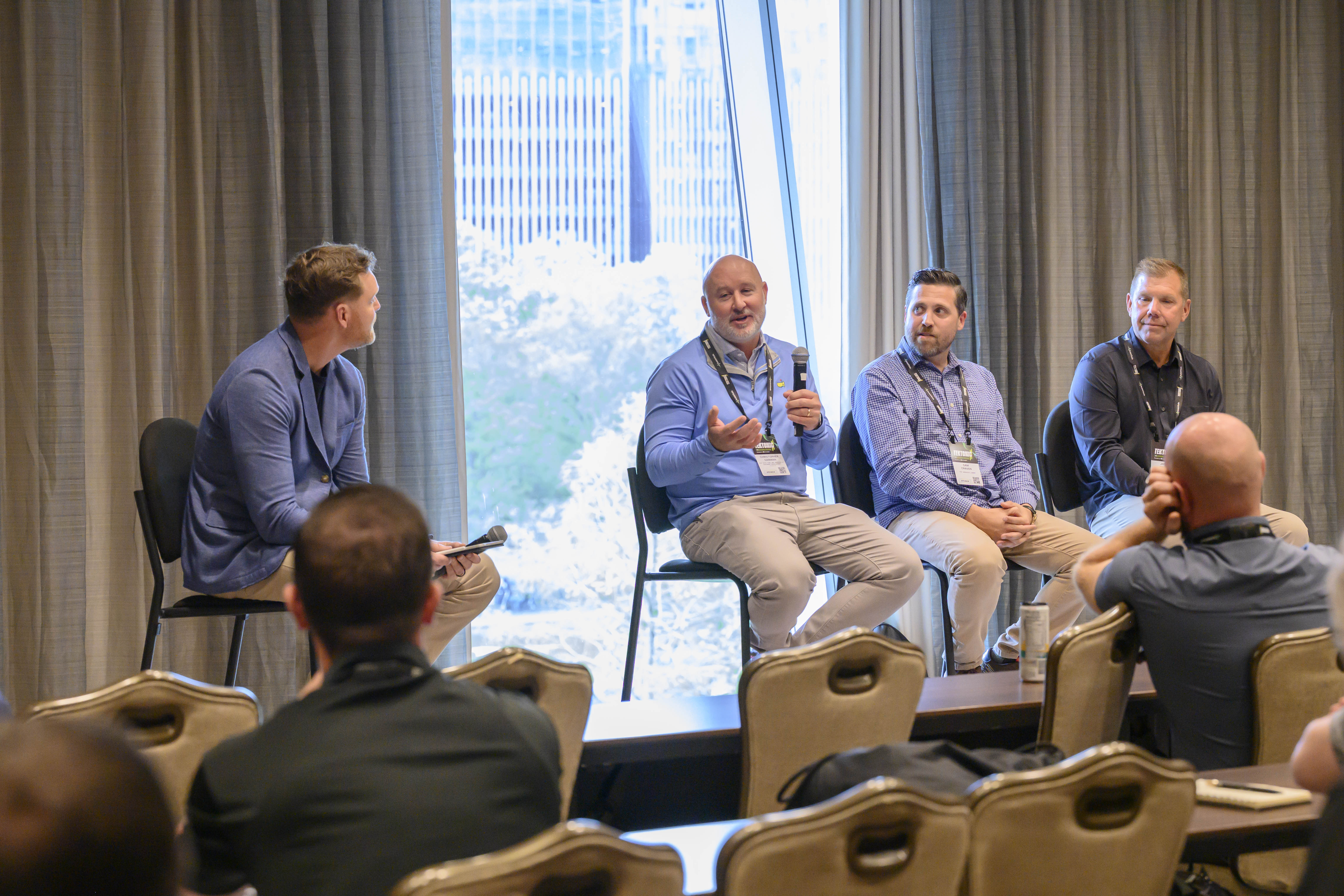
Almost 1,000 shop owners, service advisors, and technicians gathered in Houston for Tektonic 2026, Tekmetric's first industry conference. Over two days at the Marriott Marquis, attendees packed breakout rooms, traded hard-earned lessons, and heard from operators, coaches, and industry leaders who have built and scaled shops of their own.
The Question That Started It All
Tekmetric CEO and Founder Sunil Patel opened Tektonic 2026 with a question he has been asking since he was writing service tickets and mopping floors at his former Houston shop, Motorwerks of Houston: "Why does it have to be so hard? Why does it have to feel like we're fighting a war on 12 fronts?"
That question, he told the room, is the reason Tekmetric exists.
Standing in front of shop owners, service advisors, and technicians who understand that question on a cellular level, Patel walked through how much harder running a repair shop has become. Vehicles are packed with software, sensors, and calibration systems that require entirely new toolsets. Customer expectations have been shaped by on-demand everything. Technician shortages continue to press on shops across the country. And OEM data restrictions are making it harder for independent shops to do the work they were built to do.
But Patel didn't stop at the challenge. He laid out four pillars he believes the industry needs to move forward: stop celebrating burnout as a badge of honor, build genuine trust with customers and teams, invest in an ecosystem of great partners and vendors, and embrace technology that serves shops rather than extracts from them.
He closed with a simple ask for everyone in the room: be curious, be open, be generous with what you know, and be present.
"I want you to take something away from here," he said. "Something that will get you to be 1% better than you were."
That set the tone for everything that followed.
Top Takeaways
Process Consistency Wins on the Hard Days
Busy days don't create problems. They expose them. The best shops build their standard operating process before the chaos starts.
Call the day before. A preappointment call to review service history and flag overdue maintenance turns intake from reactive to planned and primes customers to say yes before they walk in the door.
Speed is your biggest sales tool. Every hour between drop-off and delivering an estimate costs roughly 10% in approval rates. Get findings to customers fast.
Set the next promise, not the finish line. Never promise a completion time you can't guarantee. Promise the next specific update and deliver it on time, every time.
The in-store customer is the highest-priority repair order in the building. Every other car can wait. The person sitting in your lobby cannot.
Improve one thing at a time. Pick one process to fix, measure it, and build accountability before moving to the next. Trying to fix everything at once fixes nothing.
Speed Closes More Jobs Than Salesmanship
Closing rates drop sharply with every hour that passes between drop-off and the customer call. A customer who has been waiting since 8 a.m. has had time to read every one-star review and talk themselves out of approving the work.
Get inspection results to customers within 30 minutes of dispatch. That's the speed zone. Everything else in the shop is secondary until that call is made.
In-store customers get findings in 15 minutes or less. The customer is sitting right there. Use it.
Relative priority is your daily compass. At any moment, the most important thing is moving the car that's furthest behind in the process. Not the loudest customer. Not the most expensive ticket. The earliest step.
Two daily goals. Full stop. Every technician runs at least eight billable hours. The shop hits its gross profit target. Nail both and everything else follows.
You Don't Have a Technician Shortage. You Have a Culture Problem.
The technician pipeline isn't as broken as it seems. What's broken is how many shops make it hard to stay.
Rethink flat rate. Hybrid pay models that combine a solid base with performance incentives align your team's goals with the shop's goals and they're far more attractive to the next generation coming into the trade.
Answer two questions before you do anything else. Why would a technician work here? Why would a customer come back? If you hesitate on either, start there.
Recognition is the highest-ROI leadership move you have. Research cited at the conference found that team members become disengaged because they don't feel seen. Fix that before you invest in anything else.
AI won't replace hospitality. Technology can handle administrative weight, but the trust a service advisor builds with a customer at the counter is irreplaceable. Invest in that skill set.
P.J. Leslie, Tekmetric's head of mid-market and enterprise sales, moderates a panel during Tektonic 2026 in which multishop owners break down the real strategies behind expansion: buying shops, building shops, systemizing operations, integrating teams, protecting culture, and planning for eventual exit or partnership.
Growing to Multiple Locations Takes More Than Money
Every multishop operator on the stage agreed: you're never fully ready, and that's fine. What matters is being profitable, having the right people, and expecting the unexpected.
Profitable and cash-positive before you move. When you make a mistake at location two—and you will—you need a healthy location to cover it.
You're ready when your shop doesn't need you. Build your bench before you open the next door. The manager for location two should already be in your building today.
Start your exit plan on day one. Almost no one in the room at one of Tektonic’s breakout sessions had a clear exit strategy. Don't leave money on the table because you never thought through how the story ends—whether that means selling, transitioning, or building for long-term cash flow.
Leadership Is the Ceiling on Everything Else
Your shop will never outperform your leadership. What you tolerate becomes your standard. How you show up on Monday morning sets the emotional temperature for everyone around you.
Know your triggers before they know you. Name what sets you off. Once you can spot it, you can stop it before it damages a relationship.
Pause for three seconds. Before you respond to anything that's gotten under your skin, stop. Three seconds is the difference between a reaction and a response.
Hear less. Listen more. After someone finishes speaking, let the silence sit. People almost always have more to say and the second thing is usually the real thing.
Walk into hard conversations knowing how you want them to end. Start with the outcome in mind, not the grievance.
Tekmetric Chief Product Officer Jared Haleck breaks down Tekmetric's new products at Tektonic 2026. The new products include Tekmetric digital ads, Smart DVI, and Tekmetric phones.
Product Announcements at Tektonic 2026
The closing session belonged to the Tekmetric product team. Drawing on data from more than 15,000 shops on the platform, Tekmetric President and COO Lauren Langston and Chief Product Officer Jared Haleck built the roadmap around key areas where winning shops consistently outperform the rest: car count, average repair order (ARO), driver experience, and cycle time.
Here's a look at what’s coming:
Tekmetric Digital Ads: AI-powered advertising on Google Maps and Search, built for the moment a driver has a problem and is ready to act. It connects directly to Tekmetric so you can see the gross profit behind every dollar of ad spend, not just clicks.
Smart DVI: Technicians walk the vehicle, narrate what they see, and Smart DVI builds the customer-ready inspection report automatically—findings organized, images annotated, and jobs pre-suggested for the estimate. Less time typing. More time turning wrenches.
Tekmetric Phones: Customer details, open repair orders, and communication history surface the moment an inbound call rings. No more looking it up while someone's waiting. A future capability in development will transcribe calls in real time and auto-populate appointment notes.
See You in 2027
Tektonic 2026 was Tekmetric's first industry conference, and it delivered on the promise Sunil Patel made from the stage: a room full of shop owners, service advisors, and technicians who showed up to get better.
The through-line across every session was the same. The shops that win are the ones that build systems, invest in their people, and keep getting 1% better. Not all at once. One thing at a time.
See how your shop stacks up against thousands of auto repair shops nationwide
You track your ARO. Maybe you watch your car count week over week. You know when a month is good and when it's below par.
But here's a question most shop owners can't answer quickly: Compared to shops like yours, are your numbers strong, average, or quietly underperforming?
There's a real difference between a number that's improving and a number that's competitive. A shop can grow ARO year over year and still be well below what high-performing shops are seeing in their market. Without an external reference point, you don't know which situation you're in.
That's the problem benchmarking solves, and it's the reason the data matters more than the direction.
Internal Tracking Tells You the Trend. Benchmarking Tells You the Truth.
Internal performance tracking is essential. If you don't know your ARO, car count, parts margin, and effective labor rate, you're managing without the most basic tools. But internal tracking has a structural limitation: it can only tell you how you're doing relative to your own history.
That's useful for spotting momentum — a rising ARO, a growing car count, tighter parts margin. What it can't tell you is whether your baseline is strong or weak relative to the market.
A shop with a $580 ARO that has grown from $520 over two years has made real progress. But if top-performing shops in their region are averaging significantly higher, that progress hasn't closed the competitive gap. It's just moved in the right direction.
The fix isn't to stop internal tracking. It's to add an external benchmark so you know what the target actually looks like.
Many shop owners get their benchmarks the informal way: conversations with peers at trade shows, numbers shared in coaching groups, or revenue figures posted in forums. These have real value, but they're also limited.
Self-reported numbers skew high (people share their wins). Peer groups are small samples. Industry averages from trade associations are often lagged and lack the granularity you need to compare fairly — a six-bay shop in a suburban market shouldn't be benchmarking against national averages that include dealership-adjacent shops in metro areas.
The more useful comparison is data drawn from shops operating in similar conditions, at similar scale, tracked in a consistent and anonymized way.
What Good Benchmarking Actually Looks Like
Effective benchmarking for an auto repair shop compares you on the four metrics that most directly drive profitability:
ARO: Are you getting full value from each car that comes through your door?
Car count: Is your volume where it needs to be to support your revenue goals?
Parts margin: Are you protecting margin as supplier costs fluctuate?
Effective labor rate: Is your real revenue per labor hour aligned with your posted rate?
Each of these metrics has a different lever. If your ARO is lagging, the fix usually involves inspection completion rates or customer communication. If your car count is stagnant, the issue is typically acquisition or retention. If your parts margin is eroding, your pricing matrix needs a look. If your effective labor rate is low, it's often a discounting or packaging problem.
Benchmarking tells you which problem to solve first. That's valuable when you have limited time and you're trying to prioritize.
How the Tekmetric Shop Index Works
The Tekmetric Shop Index is a free benchmarking tool built from data collected across more than 12,000 auto repair shops. Enter your shop's metrics and get an instant comparison showing where you stand on each of the four key measures. No Tekmetric account is required. Anyone can use it.
The output isn't a vague grade — it shows you where each metric ranks and gives you a clear picture of where the gap is largest. That's the signal that tells you where to focus first.
The benchmarking data is the starting point, not the finish line. Once you know which metric is your biggest gap, you can start asking the right questions:
If ARO is lagging: How consistently are your technicians completing and sending digital vehicle inspections (DVIs)? Are customers seeing and approving the recommended work?
If car count is flat: Are you actively pursuing new customers? Are return visit intervals optimized? Are declined jobs being followed up?
If parts margin is soft: When did you last review your parts pricing matrix? Is it adjusting for recent cost increases from your vendors?
If the effective labor rate is low: Are service writers building jobs accurately? Are discounts being applied consistently or inconsistently?
Each of these questions points toward a workflow, and Tekmetric's reporting is built to surface the answers at the job, technician, and service writer level. But even before you get to that step, knowing which question to ask is most of the work.
High-performing shops don't treat benchmarking as a one-time exercise. They check their rankings periodically, track how their numbers shift against the industry baseline, and use the comparison to coach their teams with context.
"You're at 85% DVI completion" is a data point. "You're at 85% completion, and top shops are at 95%" is a coaching conversation with direction.
"Seeing them take the shift to Tekmetric and then grow profitability in the same four walls has been phenomenal. Some of them are just exponential." — Matt Schwab, Clutch Automotive, Tekmetric Customer
Takeaways
Internal tracking shows you direction; benchmarking shows you position.
The four metrics — ARO, car count, parts margin, effective labor rate — are the right comparison points.
Good benchmarking data is consistent, anonymized, and drawn from shops with similar operating profiles.
The TSI tool is free, built from more than 12,000 shops, and gives you an instant read on where your gaps are largest.
Your benchmark result tells you which lever to pull first — and that's where the work starts.
Once you know your gaps, the next step is building a system to close them.





.svg)



.svg)

.svg)
.svg)
.svg)
.svg)
.svg)
.svg)