Tektonic 2026: What 1,000 Auto Repair Pros Learned in Houston—and What You Should Steal

Kris Turner

|

April 17, 2026

|

Read time: 3 min

Almost 1,000 shop owners, service advisors, and technicians gathered in Houston for Tektonic 2026, Tekmetric's first industry conference. Over two days at the Marriott Marquis, attendees packed breakout rooms, traded hard-earned lessons, and heard from operators, coaches, and industry leaders who have built and scaled shops of their own.

The Question That Started It All

Tekmetric CEO and Founder Sunil Patel opened Tektonic 2026 with a question he has been asking since he was writing service tickets and mopping floors at his former Houston shop, Motorwerks of Houston: "Why does it have to be so hard? Why does it have to feel like we're fighting a war on 12 fronts?"

That question, he told the room, is the reason Tekmetric exists.

Standing in front of shop owners, service advisors, and technicians who understand that question on a cellular level, Patel walked through how much harder running a repair shop has become. Vehicles are packed with software, sensors, and calibration systems that require entirely new toolsets. Customer expectations have been shaped by on-demand everything. Technician shortages continue to press on shops across the country. And OEM data restrictions are making it harder for independent shops to do the work they were built to do.

But Patel didn't stop at the challenge. He laid out four pillars he believes the industry needs to move forward: stop celebrating burnout as a badge of honor, build genuine trust with customers and teams, invest in an ecosystem of great partners and vendors, and embrace technology that serves shops rather than extracts from them.

He closed with a simple ask for everyone in the room: be curious, be open, be generous with what you know, and be present. 

"I want you to take something away from here," he said. "Something that will get you to be 1% better than you were."

That set the tone for everything that followed.

Top Takeaways

Process Consistency Wins on the Hard Days

Busy days don't create problems. They expose them. The best shops build their standard operating process before the chaos starts.

  • Call the day before. A preappointment call to review service history and flag overdue maintenance turns intake from reactive to planned and primes customers to say yes before they walk in the door.
  • Speed is your biggest sales tool. Every hour between drop-off and delivering an estimate costs roughly 10% in approval rates. Get findings to customers fast.
  • Set the next promise, not the finish line. Never promise a completion time you can't guarantee. Promise the next specific update and deliver it on time, every time.
  • The in-store customer is the highest-priority repair order in the building. Every other car can wait. The person sitting in your lobby cannot.
  • Improve one thing at a time. Pick one process to fix, measure it, and build accountability before moving to the next. Trying to fix everything at once fixes nothing.

Speed Closes More Jobs Than Salesmanship

Closing rates drop sharply with every hour that passes between drop-off and the customer call. A customer who has been waiting since 8 a.m. has had time to read every one-star review and talk themselves out of approving the work.

  • Get inspection results to customers within 30 minutes of dispatch. That's the speed zone. Everything else in the shop is secondary until that call is made.
  • In-store customers get findings in 15 minutes or less. The customer is sitting right there. Use it.
  • Relative priority is your daily compass. At any moment, the most important thing is moving the car that's furthest behind in the process. Not the loudest customer. Not the most expensive ticket. The earliest step.
  • Two daily goals. Full stop. Every technician runs at least eight billable hours. The shop hits its gross profit target. Nail both and everything else follows.

You Don't Have a Technician Shortage. You Have a Culture Problem.

The technician pipeline isn't as broken as it seems. What's broken is how many shops make it hard to stay.

  • Rethink flat rate. Hybrid pay models that combine a solid base with performance incentives align your team's goals with the shop's goals and they're far more attractive to the next generation coming into the trade.
  • Answer two questions before you do anything else. Why would a technician work here? Why would a customer come back? If you hesitate on either, start there.
  • Recognition is the highest-ROI leadership move you have. Research cited at the conference found that team members become disengaged because they don't feel seen. Fix that before you invest in anything else.
  • AI won't replace hospitality. Technology can handle administrative weight, but the trust a service advisor builds with a customer at the counter is irreplaceable. Invest in that skill set.
    ‍
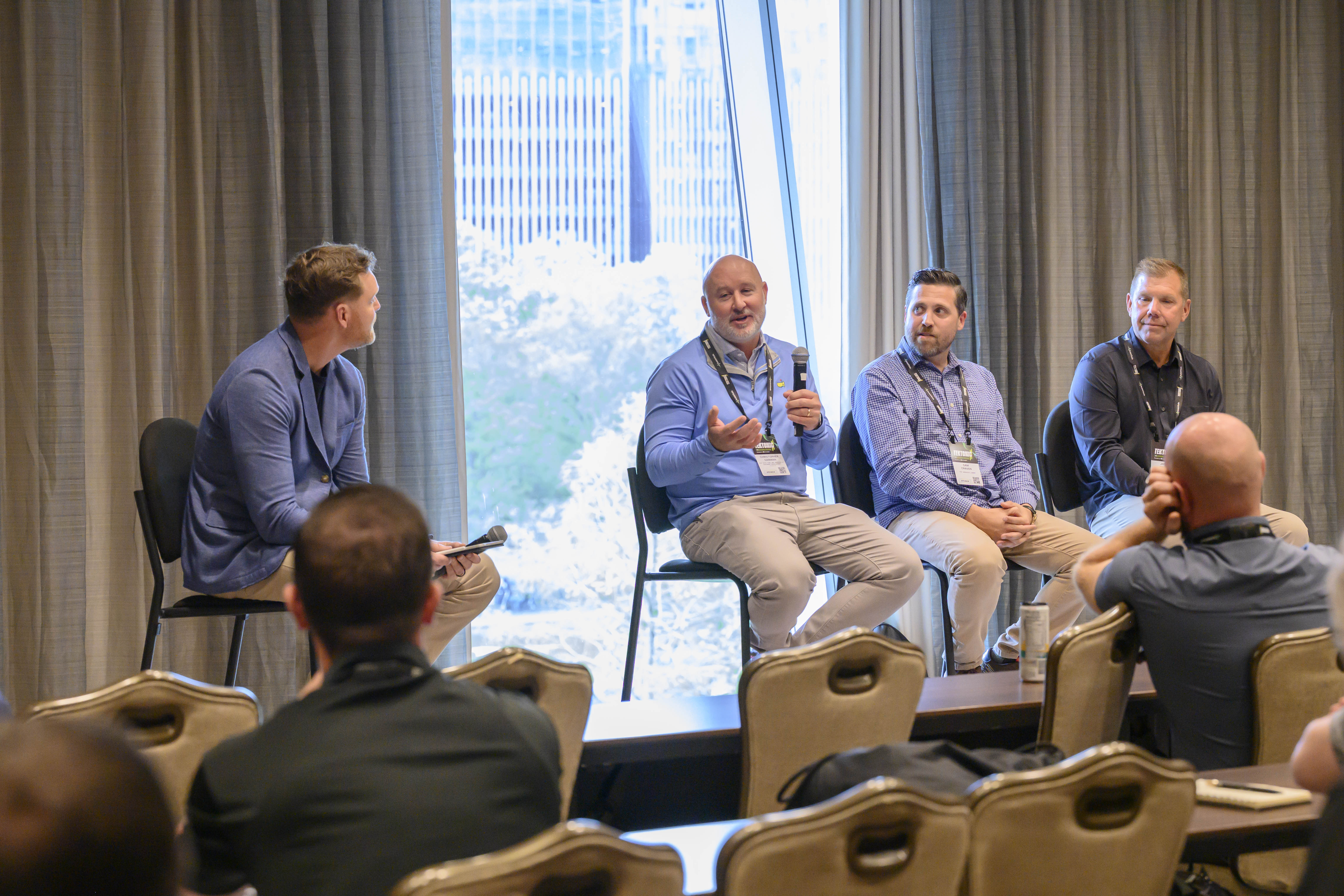
P.J. Leslie, Tekmetric's head of mid-market and enterprise sales, moderates a panel during Tektonic 2026 in which multishop owners break down the real strategies behind expansion: buying shops, building shops, systemizing operations, integrating teams, protecting culture, and planning for eventual exit or partnership.

Growing to Multiple Locations Takes More Than Money

Every multishop operator on the stage agreed: you're never fully ready, and that's fine. What matters is being profitable, having the right people, and expecting the unexpected.

  • Profitable and cash-positive before you move. When you make a mistake at location two—and you will—you need a healthy location to cover it.
  • You're ready when your shop doesn't need you. Build your bench before you open the next door. The manager for location two should already be in your building today.
  • Start your exit plan on day one. Almost no one in the room at one of Tektonic’s breakout sessions had a clear exit strategy. Don't leave money on the table because you never thought through how the story ends—whether that means selling, transitioning, or building for long-term cash flow.

Leadership Is the Ceiling on Everything Else

Your shop will never outperform your leadership. What you tolerate becomes your standard. How you show up on Monday morning sets the emotional temperature for everyone around you.

  • Know your triggers before they know you. Name what sets you off. Once you can spot it, you can stop it before it damages a relationship.
  • Pause for three seconds. Before you respond to anything that's gotten under your skin, stop. Three seconds is the difference between a reaction and a response.
  • Hear less. Listen more. After someone finishes speaking, let the silence sit. People almost always have more to say and the second thing is usually the real thing.
  • Walk into hard conversations knowing how you want them to end. Start with the outcome in mind, not the grievance.
    ‍
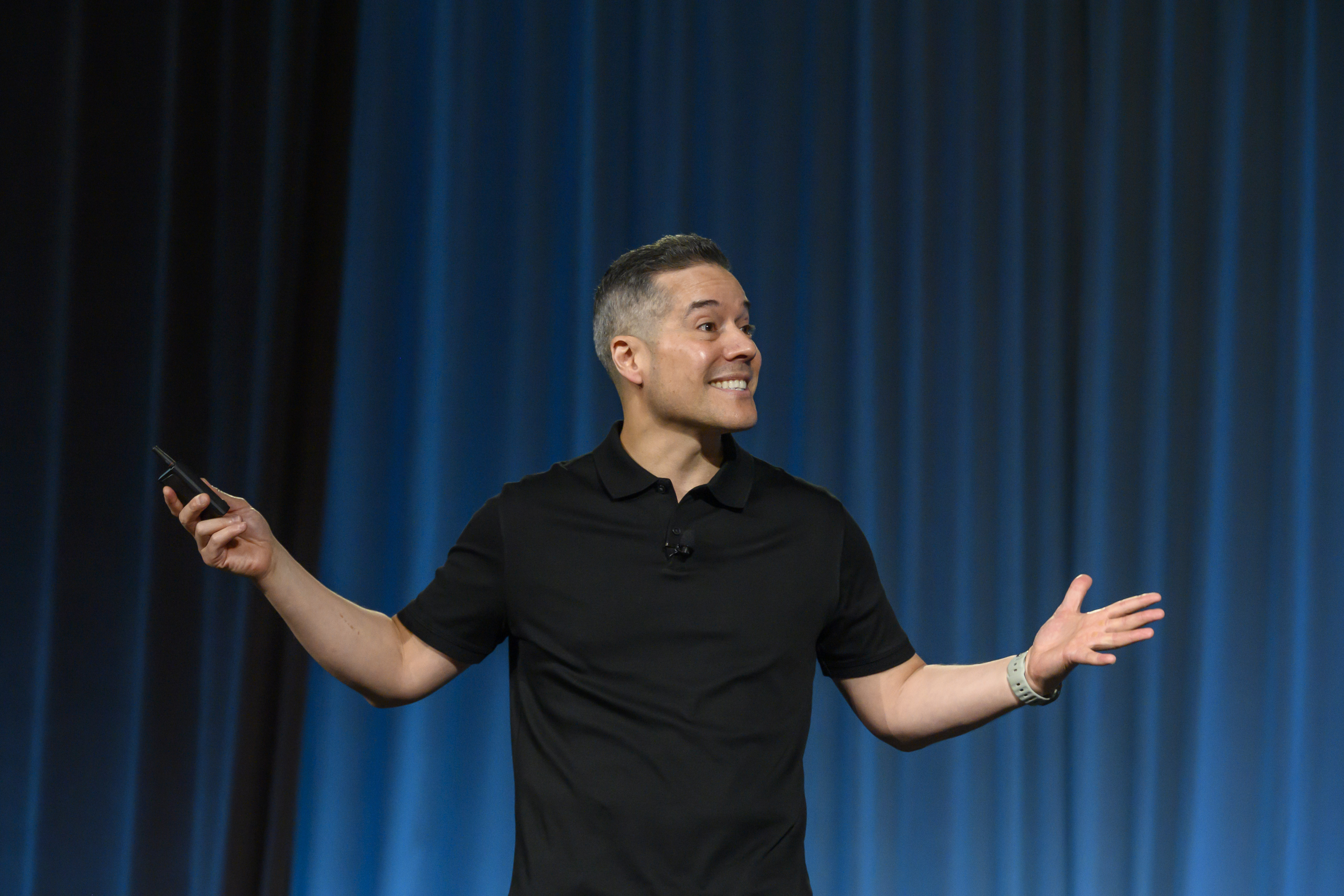
Tekmetric Chief Product Officer Jared Haleck breaks down Tekmetric's new products at Tektonic 2026. The new products include Tekmetric digital ads, Smart DVI, and Tekmetric phones.

Product Announcements at Tektonic 2026

The closing session belonged to the Tekmetric product team. Drawing on data from more than 15,000 shops on the platform, Tekmetric President and COO Lauren Langston and Chief Product Officer Jared Haleck built the roadmap around key areas where winning shops consistently outperform the rest: car count, average repair order (ARO), driver experience, and cycle time.

Here's a look at what’s coming:

Tekmetric Digital Ads: AI-powered advertising on Google Maps and Search, built for the moment a driver has a problem and is ready to act. It connects directly to Tekmetric so you can see the gross profit behind every dollar of ad spend, not just clicks.

Smart DVI: Technicians walk the vehicle, narrate what they see, and Smart DVI builds the customer-ready inspection report automatically—findings organized, images annotated, and jobs pre-suggested for the estimate. Less time typing. More time turning wrenches.

Tekmetric Phones: Customer details, open repair orders, and communication history surface the moment an inbound call rings. No more looking it up while someone's waiting. A future capability in development will transcribe calls in real time and auto-populate appointment notes.

See You in 2027

Tektonic 2026 was Tekmetric's first industry conference, and it delivered on the promise Sunil Patel made from the stage: a room full of shop owners, service advisors, and technicians who showed up to get better.

The through-line across every session was the same. The shops that win are the ones that build systems, invest in their people, and keep getting 1% better. Not all at once. One thing at a time.

Registration for Tektonic 2027 is already open. We hope to see you there.
‍

👉 Ready to grow your automotive business? [Book a personalized Tekmetric Demo Here]

FAQ

More articles

A customer trusts your shop. They've been coming for years. They know the waiting room. They trust the advisor who always explains things clearly. They never worry about the estimate.

Then they move across town, stop into your newest location, and it is a different experience altogether. The inspection isn't the same. There are pricing discrepancies among shops. And, perhaps worst of all, an advisor might have no idea they're dealing with a loyal customer.

That's the hidden cost of growth. Every location that is added is another chance for the customer experience to shift, and customers notice changes fast. For multi-shop operators, a consistent customer experience isn't a branding nicety. It's the thing that lets a customer trust the name on the building instead of the people inside it.

Consistency for customers: A consistent customer experience across locations means every shop delivers the same inspection process, pricing logic, communication, and recognition of a returning customer, regardless of which location they visit. It's achieved by standardizing workflows and centralizing customer data on one platform, rather than relying on each location to run things its own way.

Why consistency gets harder with every location you add

At one shop, consistency is almost automatic. You set the tone, you know the regulars, and your team absorbs your standards by working next to you. None of that scales. At three or five or 10 locations, the owner can't be everywhere, tribal knowledge doesn't transfer, and each shop starts developing its own way of doing things.

The drift is rarely dramatic. It's a technician at one location skipping a courtesy inspection step. It's one advisor quoting brakes $40 higher than another. It's a returning customer being treated like a stranger because their history lives at a different store. Individually small. Collectively, they add up to customers who can't predict what they'll get, and unpredictability is the opposite of trust.

The four places customer experience breaks first

When experience drifts across locations, it almost always starts in the same four places. Fix these and you've fixed most of the problem.

1. The inspection

The digital vehicle inspection (DVI) is where customers form their opinion of your shop. It's the moment they see what's wrong with photos and video instead of taking your word for it. If one location runs a thorough inspection with images and another does a quick once-over, customers get two completely different impressions of how careful your brand is. Standardizing the inspection is the single highest-leverage consistency move a multi-shop operator (MSO) can make. See how a strong DVI strategy drives approvals and trust.

2. Pricing and the menu of jobs

Nothing erodes trust faster than a customer discovering the same repair costs more at one of your locations than another. When labor rates, parts pricing, and common ("canned") jobs are set independently at each shop, that gap is inevitable. Consistent pricing logic across locations keeps a customer from feeling penalized for walking into the wrong door.

3. Customer history and recognition

Customers expect the businesses they frequent to remember them. Every major retailer can see what you bought and where, no matter which store you walk into. Auto repair customers have the same expectation now. If a loyal customer's records are trapped at the location where they were created, your newest shop can't see the declined brake job from last spring or the maintenance that's now due. Shared history is what lets any location pick up the relationship where the last one left off. Learn how Shared Customer History works.

4. Communication

How you reach customers, texts for approvals, inspection links, status updates, sets the tone for the whole visit. If one location texts photos and estimates within minutes and another still calls and describes problems over the phone, customers experience two different service standards under one brand. Consistent communication templates and channels keep the voice of your business the same everywhere.

How multi-shop software makes consistency the default

Here's the shift: consistency shouldn't depend on every location choosing to do the right thing. It should be built into the system they all work in. That's what a true multi-shop platform does. It turns your standards into settings, so the right way is simply the way the software works.

With Tekmetric Multi-Shop, operators standardize DVIs, canned jobs, pricing, and discounts across every location from one place, so a repair order opened at any shop starts from the same playbook.

Shared Customer History connects customers across shops, so any location can view a customer's full history, declined jobs, past service, contact info, without re-entering it or treating them like a first-timer.

And because everything runs on one login with a portfolio-wide dashboard, owners see how each location is actually performing in real time, not just revenue, but the operational habits that shape the customer experience. When a location starts to drift, you can see it and coach it before customers feel it.

Why it matters: Standardization isn't about making every shop identical for its own sake. It's about making a promise to customers, the same care, the same clarity, the same recognition, that holds no matter which of your locations they choose. That promise is what turns multiple shops into one trusted brand.

What it looks like when it works

Leroy Ingram, who runs Ooroo Auto Care, put the visibility side of it plainly:

"Now I can look at everybody at a glance. I can be in a different state, different city and know exactly what's going on in each location all the time. That's not something I had before."
— Leroy Ingram, Ooroo Auto Care

That's the operational backbone of consistency: when an owner can see every location clearly, standards stop being a hope and start being something you can actually manage.

Where to start

You don't have to fix everything at once. If you're feeling the drift, start with the highest-impact standard and work down.

  • Standardize your inspection first. Set one default DVI template so every vehicle at every location gets the same thorough treatment.
  • Align pricing and canned jobs so the same repair costs the same across shops.
  • Connect customer history so any location can recognize and serve a returning customer.
  • Standardize communication so approvals, estimates, and updates feel the same everywhere.

Do those four things and you'll close most of the customer experience gaps between your best location and your newest one.

See how your shop stacks up against thousands of auto repair shops nationwide

You track your ARO. Maybe you watch your car count week over week. You know when a month is good and when it's below par.

But here's a question most shop owners can't answer quickly: Compared to shops like yours, are your numbers strong, average, or quietly underperforming?

There's a real difference between a number that's improving and a number that's competitive. A shop can grow ARO year over year and still be well below what high-performing shops are seeing in their market. Without an external reference point, you don't know which situation you're in.

That's the problem benchmarking solves, and it's the reason the data matters more than the direction.

Internal Tracking Tells You the Trend. Benchmarking Tells You the Truth.

Internal performance tracking is essential. If you don't know your ARO, car count, parts margin, and effective labor rate, you're managing without the most basic tools. But internal tracking has a structural limitation: it can only tell you how you're doing relative to your own history.

That's useful for spotting momentum — a rising ARO, a growing car count, tighter parts margin. What it can't tell you is whether your baseline is strong or weak relative to the market.

A shop with a $580 ARO that has grown from $520 over two years has made real progress. But if top-performing shops in their region are averaging significantly higher, that progress hasn't closed the competitive gap. It's just moved in the right direction.

The fix isn't to stop internal tracking. It's to add an external benchmark so you know what the target actually looks like.

➡ See how your ARO compares →

The Problem With Benchmarking From Anecdotes

Many shop owners get their benchmarks the informal way: conversations with peers at trade shows, numbers shared in coaching groups, or revenue figures posted in forums. These have real value, but they're also limited.

Self-reported numbers skew high (people share their wins). Peer groups are small samples. Industry averages from trade associations are often lagged and lack the granularity you need to compare fairly — a six-bay shop in a suburban market shouldn't be benchmarking against national averages that include dealership-adjacent shops in metro areas.

The more useful comparison is data drawn from shops operating in similar conditions, at similar scale, tracked in a consistent and anonymized way.

What Good Benchmarking Actually Looks Like

Effective benchmarking for an auto repair shop compares you on the four metrics that most directly drive profitability:

  • ARO: Are you getting full value from each car that comes through your door?
  • Car count: Is your volume where it needs to be to support your revenue goals?
  • Parts margin: Are you protecting margin as supplier costs fluctuate?
  • Effective labor rate: Is your real revenue per labor hour aligned with your posted rate?

Each of these metrics has a different lever. If your ARO is lagging, the fix usually involves inspection completion rates or customer communication. If your car count is stagnant, the issue is typically acquisition or retention. If your parts margin is eroding, your pricing matrix needs a look. If your effective labor rate is low, it's often a discounting or packaging problem.

Benchmarking tells you which problem to solve first. That's valuable when you have limited time and you're trying to prioritize.

How the Tekmetric Shop Index Works

The Tekmetric Shop Index is a free benchmarking tool built from data collected across more than 12,000 auto repair shops. Enter your shop's metrics and get an instant comparison showing where you stand on each of the four key measures. No Tekmetric account is required. Anyone can use it.

The output isn't a vague grade — it shows you where each metric ranks and gives you a clear picture of where the gap is largest. That's the signal that tells you where to focus first.

➡ Benchmark your shop now →

What to Do After You See Your Rankings

The benchmarking data is the starting point, not the finish line. Once you know which metric is your biggest gap, you can start asking the right questions:

  • If ARO is lagging: How consistently are your technicians completing and sending digital vehicle inspections (DVIs)? Are customers seeing and approving the recommended work?
  • If car count is flat: Are you actively pursuing new customers? Are return visit intervals optimized? Are declined jobs being followed up?
  • If parts margin is soft: When did you last review your parts pricing matrix? Is it adjusting for recent cost increases from your vendors?
  • If the effective labor rate is low: Are service writers building jobs accurately? Are discounts being applied consistently or inconsistently?

Each of these questions points toward a workflow, and Tekmetric's reporting is built to surface the answers at the job, technician, and service writer level. But even before you get to that step, knowing which question to ask is most of the work.

➡ Benchmark your shop now →

The Shops Getting This Right

High-performing shops don't treat benchmarking as a one-time exercise. They check their rankings periodically, track how their numbers shift against the industry baseline, and use the comparison to coach their teams with context.

"You're at 85% DVI completion" is a data point. "You're at 85% completion, and top shops are at 95%" is a coaching conversation with direction.

"Seeing them take the shift to Tekmetric and then grow profitability in the same four walls has been phenomenal. Some of them are just exponential."  — Matt Schwab, Clutch Automotive, Tekmetric Customer

Takeaways

  • Internal tracking shows you direction; benchmarking shows you position.
  • The four metrics — ARO, car count, parts margin, effective labor rate — are the right comparison points.
  • Good benchmarking data is consistent, anonymized, and drawn from shops with similar operating profiles.
  • The TSI tool is free, built from more than 12,000 shops, and gives you an instant read on where your gaps are largest.
  • Your benchmark result tells you which lever to pull first — and that's where the work starts.

Once you know your gaps, the next step is building a system to close them.

➡ Benchmark your shop now →

‍

Chargebacks are something that no shop owner wants to deal with.

Your business relies on big-ticket sales, and chargebacks on those sales can squeeze your margins.

When a guest goes through their bank or credit card company to get a refund, whether it’s because they were unhappy with the repair or not, it can leave shop owners in a bind where they might have to eat the cost of the labor, parts, and profit.

There are some cases where business owners can make a case against the chargeback, but it can be a lengthy process and most banks and credit card companies will side with the cardholder who’s making the complaint.

Protecting your business from chargebacks doesn’t start when the payment is processed, nor does it end with being reimbursed for a single chargeback. The best way to protect your business from chargebacks is to establish clear, open communication with your guests and adhere to a consistent and secure payment process.

Always Get Your Guests’ Consent Before Doing Work

When your service advisors take guests through the repair order, they should listen carefully to what the client wants; service advisors can never be too careful.

If that means spending some extra time to review the repair order with the guest, it’s time well spent.

A little more time spent on the front-end can save you a lot more time on the back-end. Once the RO is thoroughly reviewed, you can get either written or verbal consent for the work and the cost. It’s worth keeping in mind that it’s easier to document written consent.

Shop Tip: Use the Courtesy Inspection to Guide the Approval Process.

Using a shop management system like Tekmetric where the guest can see the courtesy inspection and click through and select the work they want and the work they want to put on hold can set clearer guidelines for both the guest and the service advisor.

Establish a Transparent Relationship with Your Guests

Providing excellent customer service is good practice for any auto repair shop, but it also goes a long way toward preventing chargebacks.

Let your guests know that you’re committed and dedicated to fixing their problem, even if that means taking their vehicle back into the shop if the guest is not 100% satisfied.

If you make it clear to your guests that they can come back to you about any concerns, they are far less likely to go to their bank or credit card company first. And it’s better to do a little extra work to ease the mind of your guest than it is to give away an entire repair order for free or go through legal hassles.

Shop Tip: Set a Clear and Easy Return Policy.

If your shop doesn’t already have one, consider establishing a clear and easy return policy and make it visible to guests via signage or with messaging on repair orders.

Simple policies such as “If you’re not satisfied, call us, and we’ll make it right” can go a long way in terms of letting guests know they should go straight to you if there’s something wrong.