Maintaining an efficient workflow is crucial to the success of any auto repair shop. A breakdown in workflow can lead to delays, a frustrated team, and unsatisfied customers. One key area where workflow can break down is during the inspection and estimate process.
By investing in a more modern, cloud-based shop management system, you can establish a transparent, replicable digital vehicle inspection and repair estimate process, and streamline parts ordering so that service advisors can dispatch repair orders quickly to technicians.
Simplify Your Shop's Workflow
Once the service advisor has entered the relevant customer notes into your shop management platform, the guest needs to know what’s actually wrong with their vehicle so they can decide what work needs to be done.
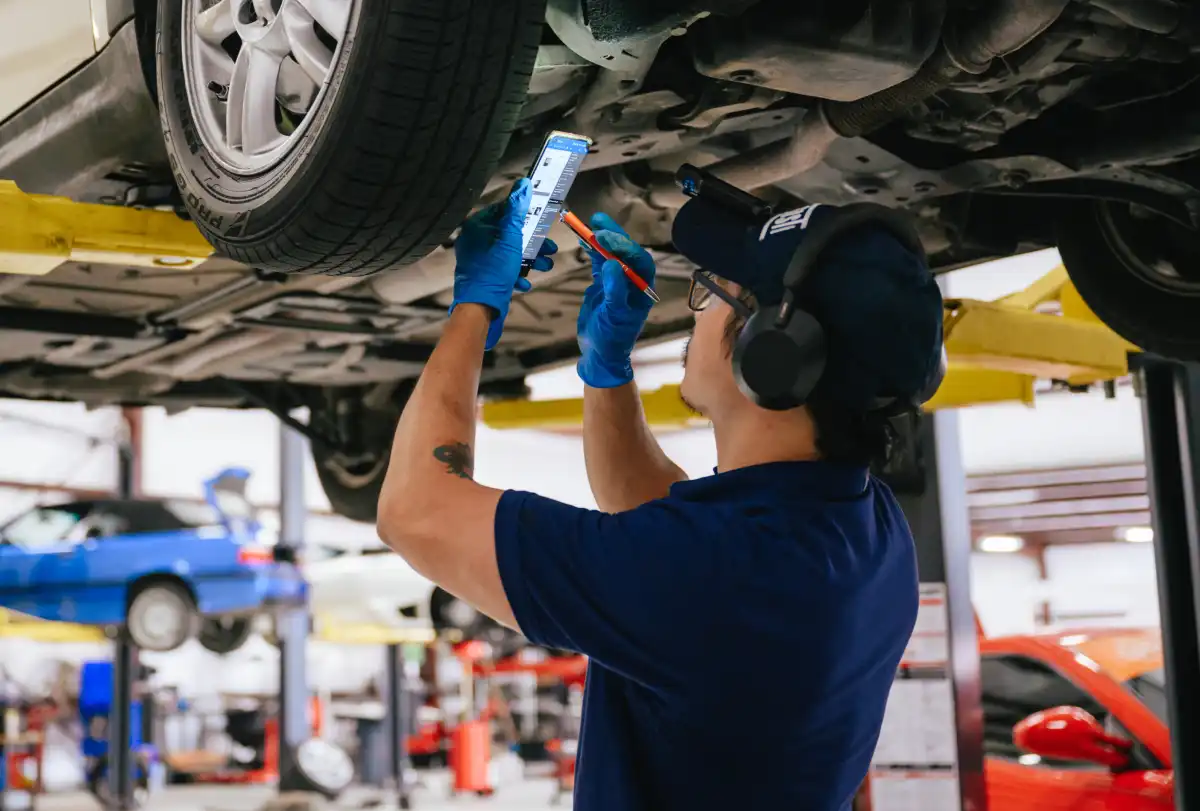
At this stage, service advisors can use digital vehicle inspections (DVIs) to give customers a visual of exactly what’s wrong with their car.
DVIs help build trust with customers because they add an additional layer of transparency. Guests can see with their own eyes that the repairs listed are necessary. DVIs also make your shop more efficient because technicians and service advisors will be able to work with the same information and collaborate in one place.
Once the technician has finished their inspection and creates a DVI, the service advisor can put together a repair estimate to send along with or after the DVI. That repair estimate should break down each repair so the guest can see exactly what works need to be done, and the urgency of the work.
Modern shop management tools streamline the creation of DVIs and repair estimates. Technicians and service advisors can collaborate in real-time to create accurate, easy-to-understand inspection reports and estimates, and service advisor can dispatch a technician to run a DVI in real-time.
The technician can then go through a pre-set list of tasks for different types of inspections.
Tighten Up Your Shop’s Parts Ordering Process
Once the guest has approved specific jobs, the service advisor should know exactly which parts to order (if they aren’t already in the shop’s stock or inventory).
Your shop’s service advisors should be able to quickly and easily shop around for parts, place orders, and keep technicians in the loop about when the parts have arrived. As for parts reconciliation, a comprehensive auto repair shop management platform should automatically keep track of purchase orders and play nice with your accounting software.
Shop management software can further simplify parts ordering by integrating with major parts vendors, enabling service advisors to place orders with just a few clicks. If the service advisor calls up the local parts dealer instead, they can place an order and make note of it within individual repair orders.
The service advisor can add additional notes, such as who the point of contact is at the local dealer and what number to call if needed.
With a comprehensive shop management system, service advisors can indicate each stage of the parts ordering process—needed, quoted, ordered, and received. Additionally, the software should automatically keep track of parts ordering details.
Quickly Dispatch Tickets to Technicians
The service advisor has gathered all the customer information, the customer has approved the repair estimate, and the parts are at the shop. Now, it’s time for the fun part—starting the actual repair! But it’s important that technicians are set up for success.
The service advisor needs to get a quick snapshot of what each technician is working on and what’s in their repair pipeline, and then quickly dispatch repair orders to an available tech. The service advisor should be able to do this from behind their desk, rather than having to go find individual technicians and ask them questions about their workload.
Shop management tools can give service advisors a bird’s eye view of each technician’s workload from their workstation. Service advisors should be able to go into the software and see a list of outstanding repair orders.
From there, the service advisor can dispatch a repair order to the appropriate technician. If it’s more efficient, they can dispatch individual line items from a repair order to different technicians in order to distribute work more evenly.
Work Smarter with the Right Tools for the Job
Using a comprehensive shop management software like Tekmetric can help streamline the process of creating DVIs and repair estimates, simplify parts ordering, and dispatch tickets to technicians.
See why thousands of auto repair shops rely on Tekmetric.
If you're running an auto repair shop, investing in a car lift is essential. A high-quality vehicle lift makes it easier to work on cars, increases efficiency, and ensures safety. But how much does it actually cost to install a car lift? That depends on the type of lift, installation costs, and other factors such as weight capacity and safety features. Let’s break it all down so you can pick the best automotive lift for your needs.
Do you need a car lift?
Car lifts are essential in auto repair shops because they provide mechanics with better access to a vehicle’s undercarriage, making inspections, repairs, and maintenance tasks safer, more efficient, and more comfortable. Unlike floor jacks, lifts offer a stable and elevated workspace, reducing the risk of injuries and improving workflow.
With a car lift, technicians can quickly perform tasks such as oil changes, brake repairs, exhaust system work, and suspension adjustments without having to crawl under the vehicle. This efficiency leads to faster turnaround times and higher shop productivity.
Additionally, lifts help maximize shop space by allowing vertical storage for vehicles, which is especially useful in high-volume repair shops. Overall, car hoists are a fundamental investment for any auto repair shop looking to enhance efficiency, safety, and the quality of service provided to customers.
Types of car lifts and their costs
Each type of lift has its pros and cons. Some lifts are better for oil change shops and some are better for tire or repair shops. In general, car lifts can cost between $1,000 and $20,000 depending on brand, lift capacity, lift height, and features. Here’s a comprehensive look at the most common lift options for your shop.
Two-Post car lifts
A two-post car lift is one of the most popular choices for auto repair shops. They are popular because they take up less space and can be affordable depending on features. Make sure to plan out your shop layout as these lifts are permanent and cannot be easily moved. These hoists come in asymmetric and symmetric configurations, allowing flexibility based on vehicle type.
Price: $3,000 - $10,000
Best For: General repair shops working on SUVs and smaller cars.
Lift capacity: 5,000 - 10,000 lbs.
Popular brands: BendPak, Rotary, Tuxedo.
Advantages: High lifting capacity while saving space for smaller shops.
Four-Post lifts
A four-post lift provides greater stability and weight capacity, making it ideal for heavier vehicles. If your shop works on a lot of trucks or heavy-duty vehicles, the four-post lift might be the best lift for you. Tire and brake shops should avoid these lifts as the tires sit on the lift making it difficult to work on these areas.
Price: $5,000 - $25,000
Best For: Dealerships and professional shops.
Lift capacity: 7,000 - 14,000 lbs.
Popular brands: BendPak, Titan, Tuxedo, Rotary.
Advantages: Heavier lifting capacity for larger vehicles.
Scissor lifts
If saving space is your top priority, the scissor lift may be your best option. They are almost invisible when not in use and lie flat on the ground to optimize garage space. Double check the lift capacity and height to make sure it can accommodate the types of vehicles you work on.
Price: $1,500 - $10,000
Best For: Quick repair shops where space is limited.
Lift capacity: 5,000 - 15,000 lbs.
Brands: QuickJack, BendPak, MaxJax
Advantages: Compact and cheaper.
In-Ground lifts
In-ground car lifts are a great choice for shops that work on heavier vehicles and want to save space. These lifts are the perfect balance of the space saving capabilities of a scissor lift while also providing optimal strength for large vehicles.
Price: $10,000 - $25,000
Best For: Repair shops and dealerships.
Lift capacity: 5,000 - 20,000 lbs.
Brands: BendPak, Rotary, Atlas
Advantages: Compact while also offering enough muscle.
Portable car lifts
If your shop layout frequently changes or you are a mobile mechanic, a portable lift may be the best option. These lifts can be easily moved around a garage or taken to a job site and are often the cheapest option. However, they can be less reliable and don’t provide the same level of strength as a stationary lift.
Price: $500 - $5,000
Best For: Home garages, mobile mechanics, DIY enthusiasts.
Lift capacity: 5,000 - 10,000 lbs.
Brands: QuickJack, MaxJax
Advantages: Affordable, compact, mobile.
Installation prices for car lifts
Installing a vehicle lift is not just about purchasing the unit. You also need to consider the installation costs, which can vary depending on the type of lift and garage setup. Here are the main factors affecting installation costs:
1. Concrete requirements
Most lifts, especially two-post car lifts and four-post lifts, require a thick concrete base. If your floor isn’t thick enough, you may need reinforcement, which adds to the cost.
2. Electrical setup
Lifts need power, and if your garage isn’t wired for it, you’ll need an electrician.
3. Air compressors & accessories
Some lifts require compressors and additional balancer tools for operation.
4. Professional installation
Hiring a pro ensures the lift is ALI-certified and meets safety regulations.
Choosing the right car lift for your auto repair shop
Each type of lift comes with its own advantages, making it important to choose the right one based on your needs. Here are some things to consider when making your decision:
How big is your shop?
Which repair services do you offer?
What is your budget?
Does the lift offer a warranty?
Will you garage layout change over time?
How important is a car lift warranty to you?
How heavy will the vehicles you work on be?
What is the average review rating of the lift?
How easy or hard is the lift to install?
How much will the maintenance cost?
Final thoughts
Installing a vehicle lift in your auto repair shop is a smart investment. Whether you choose a two-post car lift, scissor lifts, or portable lift, knowing the lift cost and installation costs upfront can help you budget wisely. Whatever you choose, ensure it’s ALI-certified for safety and performance. Lastly, don’t forget about regular maintenance and safety inspections to ensure your lift continues to run for many years.
Auto repair shops might bulk order carbon copies, or you might find a template online and print as many copies as your shop needs. Or, if your shop uses digital templates, you might have to deal with time-consuming digital file management.
Filling out the forms over and over, be it by handwriting or typing, can become tedious. And both options are less than ideal for record-keeping.
Paper can get lost, and digital files can become overwritten or corrupted. Both approaches are inconvenient and ultimately slow things down at your shop. And the impression you give during the payment process can determine whether those customers return or not.
Here are four reasons why a shop management system is better than an auto repair invoice template approach for your business.
We brought our entire team together in person to kick off the year in Houston, and to say I was anything short of blown away would be an understatement.
We pride ourselves on being a remote-first company and we’ll continue to build our team remotely with the best talent from across the world, but there sure was something special about having everyone in person at the same time, in the same place, uniting around the same goals.
When you have the opportunity to gather such an amazingly talented group in the same room, you’ll be surprised by what happens from the brainstorming, to the tactical collaboration – and well, all the fun we had together!
And this wasn’t all just about us. Because in the end, we’re here to support all the amazing independent auto repair shops that do great work every day getting cars back on the road.
Tekmetric's Dedication to Customer Obsession
A dozen of our customer shops were gracious enough to host folks across our teams as we spent time with shop owners, advisors, and technicians diving into the next batches of innovation the industry needs us to build into Tekmetric.
Running a repair shop is the background of everything we do. It's that partnership between Tekmetric and the auto repair shops that leverage the platform daily that enables us to build the absolute best tool for the job: running an independent auto repair shop.
As we continue to build Tekmetric, I’m especially keen to hear more than ever from technicians on this front.
At a time when industry continues to fight to keep up with challenges in educating, recruiting, and retaining top-quality techs, we’re taking a more intentional stance on the role a shop management system can play in helping your shop build and support the best team possible. Be sure to look for more from us throughout the year in this area.
We’ve always started anything we do at Tekmetric with a ‘customer obsession’ mindset – and I’m proud to extend this further down to the technician level this year.
As we grow, I’m also noticing how important it is to spend more of my time transferring real-world shop knowledge to every member of our team. In the early days, our Tekmetric office was the upper level of my shop, and I probably took for granted how easy it was for our team to observe the activities going on downstairs.
It's rejuvenating to now bring over 100 of our teammates to shops and immerse ourselves in the challenges our customers are facing. I smile when I see a well-drawn whiteboard with jobs listed out in columns, color-coded and sorted by promise time.
I think back on the early ideas that went into translating age-old management concepts into better versions of what are now standard features in Tekmetric.
I get even more joy when one of our new product managers builds well past my ideas, or I hear one of our onboarding managers asking a shop owner a question that even I’m not sure I would have thought of.
One thing is certain: the opportunity for our team to connect, collaborate, and brainstorm our next steps as a shop management system has ignited our drive for success.
Driving for Success in 2024
We are growing and maturing in real-time, and the pace of our new thinking and new innovation is mind-blowing.
If you’re a current customer, our doors are always open. Feedback from front-line employees, technicians, service writers, general managers, and of course shop owners, has turned into some of our most powerful features and functionality.
If you want to connect with our team, we welcome you to email us at support@tekmetric.com to set up a time with our product team to discuss ways we can improve, or set up a 1:1 consultation if you need additional support.
And if you haven’t made the switch to Tekmetric yet, what are you waiting for? Book some time with one of our Shop Advisors here to talk through how we might be able to help your shop run better than it ever has.
From our team to yours – thanks for your continued trust and support as we grow Tekmetric. 2024 figures to be a great year for us and for the industry. If there’s anything I can personally do to help your shop measure up to another level, please reach out!





.svg)



.svg)

.svg)
.svg)
.svg)
.svg)
.svg)
.svg)